
 Practical solutions for Sydney homes and humid climates
Wooden furniture — whether heirloom dining tables, designer cabinets, or handcrafted chairs — enriches a home with beauty and warmth. But wood is a living, organic material, and a range of environmental and biological forces can degrade it over time. In Sydney’s climate, especially, factors like high humidity, salt air in coastal suburbs, and mould growth pose heightened risks.
Understanding the common threats to wood — and how to prevent or mitigate them — can save hundreds or thousands of dollars in repairs and replacements.
1. Moisture & Humidity — The Silent Structural Breaker
Why it’s bad for wood
Wood naturally expands and contracts with changes in moisture. In high humidity — common in Sydney’s warmer months — wood absorbs moisture from the air. This swelling can lead to:
-
Warping and cupping of tabletops or boards
-
Joints loosening or cracking
-
Splitting of veneers and inlays
Sydney’s climate, especially near the harbour and coast, regularly experiences humidity levels above 60–70% in summer. This makes moisture one of the most relentless enemies of indoor wood.
What you can do
Control indoor humidity
-
Use a dehumidifier in rooms with wooden furniture.
-
Target humidity levels between 40–60% — ideal for wood stability.
-
Run air conditioning in summer evenings to reduce moisture.
Ventilate smartly
-
Open windows in cooler, drier parts of the day.
-
Use exhaust fans in bathrooms and kitchens where moisture peaks.
Protect high-risk pieces
-
Avoid placing wood directly against external walls that stay cool and damp.
-
Leave small gaps between furniture and walls to allow airflow.
2. Mould & Mildew — The Fungal Invader
Why Sydney makes this worse
Sydney’s humidity and occasional rainfall spur mould growth on organic surfaces. Timber furniture — especially softer woods or unfinished edges — can become a breeding ground for spores.
Mould doesn’t just stain: it digests wood fibres, weakening structure and spreading rapidly if unchecked.
Signs to watch for
-
Black, green, or grey speckling on surfaces
-
Musty odour near furniture
-
White fuzzy growth in joints or crevices
How to fight it
Clean immediately
-
Mix white vinegar and water (50:50) to wipe affected areas.
-
For tougher stains, use a mild detergent and soft brush.
Improve airflow
-
Circulate air with fans and open doors.
-
Avoid blocking vents with furniture.
Use anti-fungal products
-
Apply products formulated for wood that prevent mould spores from settling.
-
Ensure they’re suitable for finished wood — some chemicals can damage surfaces.
Keep furniture off wet floors
-
Place pads or risers under legs in areas prone to damp.
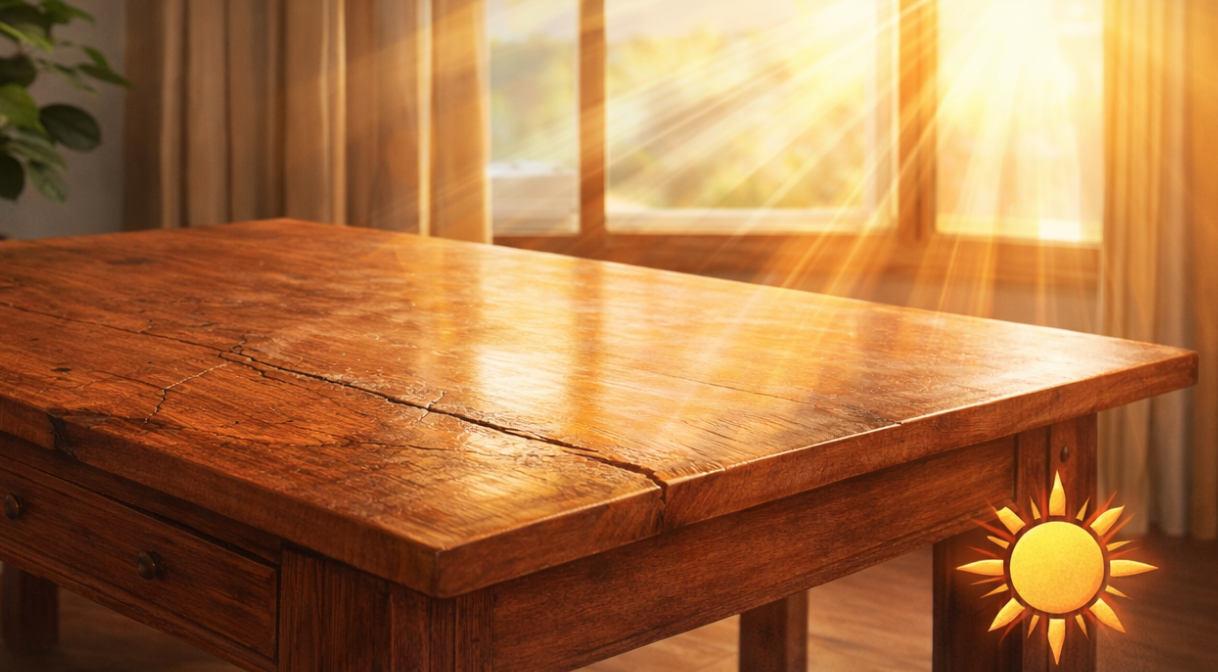
3. Heat & Sunlight — Fading and Cracking Culprits
What happens
Direct sunlight and heat cause wood to:
-
Fade in colour
-
Dry out and crack
-
Finish deterioration
South-facing rooms in Sydney might be shaded, but north and west exposures get intense afternoon sun — especially in summer.
Preventative strategies
Block UV rays
-
Use curtains, blinds, or UV-protective window film.
-
Rotate furniture periodically to prevent uneven fading.
Keep distance from heaters
-
Don’t place wooden pieces near fireplaces, radiators, or direct heater airflow.
Use protective coatings
-
Waxes and oils nourish wood and reduce drying.
-
Re-apply every 6–12 months, depending on use and exposure.
4. Termites — The Hidden Home Invader
Why termites matter in Australia
Sydney, like much of Australia, is home to subterranean and timber-feeding termites. They can silently infest furniture, especially pieces that:
-
Sit on damp floors
-
Are made of untreated timber
-
Have contact with soil or mulch
Signs of termite damage
-
Hollow-sounding wood
-
Tiny pinholes
-
Mud tubes on or near furniture and walls
Protection tips
Professional inspection
-
Have a licensed pest inspector check annually.
Avoid wood-soil contact
-
Use furniture risers in damp areas like garages or outdoor patios.
Use treated timber
-
Consider furniture made with termite-resistant wood or treated cores for high-risk spaces.
Pest barriers
-
In outdoor areas, use termite barriers around foundations and decks.
5. Water Spills & Wet Rings — The Everyday Destroyer
How it damages wood
Spilled water — from cups, plants, cleaning mishaps — left to sit on wood will:
-
Raise the grain
-
Stain finishes
-
Cause rot in prolonged cases
Glass condensation on hot days is a common culprit, especially during long summer BBQs in Sydney homes.
Simple solutions
Use coasters and placemats
-
Never place drinks directly on wood.
-
Use protective felt pads under decorative items.
Wipe immediately
-
Blot — don’t rub — spills to avoid spreading moisture.
-
Dry thoroughly with a soft cloth.
Seal surfaces
-
A good wax, oil, or lacquer finish rebuilds a protective barrier.
-
Refinish older pieces if the finish is worn.
6. Scratches, Dents & Everyday Wear
Domestic traffic hazards
Daily life — pets, children, moving objects — can leave:
-
Scratches
-
Scuffs
-
Dents
-
Finish dulling
Over time, these surface imperfections accumulate and make wood look old, tired, or damaged.
Preventive measures
Soft furnishings
-
Felt pads under furniture legs
-
Rugs in high-traffic areas
-
Chair leg caps
Mindful movement
-
Lift objects — don’t drag them across wood surfaces.
Regular polishing
-
High-quality wood polish fills minor scratches and enhances sheen.
-
Avoid silicone-based products — they can build up and damage finishes long-term.
7. Pests Other Than Termites (Beetles & Wood Borers)
What they are
Certain insects — such as powderpost beetles and wood borers — can infest timber, leaving tiny holes and weakening internal structure.
Sydney’s temperate climate supports diverse insect activity, particularly in older homes or pieces stored in humid basements or sheds.
What to look for
-
Fine, powdery frass (dust) near holes
-
Tiny exit holes
-
Weak or brittle wood that breaks easily
What to do
Professional treatment
-
Carried out by pest control specialists — often using heat or fumigation.
Isolate infested pieces
-
Move suspect furniture to a dry, well-ventilated area away from other wood.
Store dry
-
Avoid leaving wooden furniture in poorly ventilated sheds or damp garages.
8. Chemical Damage & Improper Cleaning
The cleaning paradox
Using the wrong product can strip finishes, discolour wood, or dull protective layers. Common culprits include:
-
Ammonia-based cleaners
-
Bleach
-
Harsh solvents
-
Abrasive powders
Sydney households, like others, might grab whatever cleaning spray is handy — but not all are wood-safe.
Safe cleaning routine
Dust regularly
-
Use a microfiber cloth or soft brush to remove dust.
-
Dust itself can act like sandpaper if left on surfaces.
Mild solutions only
-
A small amount of dish soap diluted in warm water is usually sufficient.
-
Wipe with a damp cloth (not wet).
Dry immediately
-
Never leave moisture sitting after cleaning.
Re-condition finishes
-
Use wood conditioners or waxes that are designed for your type of wood and finish.
Bonus: Outdoor Damage — Sun, Salt, Rain
For patios, balconies or garden furniture:
-
Salt air near the ocean (e.g., Northern Beaches, Eastern Suburbs) accelerates finish breakdown.
-
Sun exposure fades colour and dries wood.
-
Rain soaks in and promotes rot and mould.
Outdoor protection tips
Choose weather-treated wood
-
Teak, cedar, and hardwoods are more durable outdoors.
Seal annually
-
Use marine-grade sealants or oils.
Cover or store
-
A breathable cover protects wood without trapping moisture.
-
Store indoors during heavy wet seasons.
Protect Your Investment
Wooden furniture is not just functional — it’s an investment in comfort, style, and heritage. But wood must be cared for actively, especially in climates like Sydney’s, where humidity and heat swings accelerate common problems like mould and warping.
Checklist for long-lasting wood
✔ Control indoor humidity
✔ Clean spills and dust promptly
✔ Use protective finishes and pads
✔ Inspect for pests yearly
✔ Choose the right cleaner
✔ Protect from sun and outdoor elements
With vigilance and simple preventive steps, you can extend the life and beauty of wood for generations.