
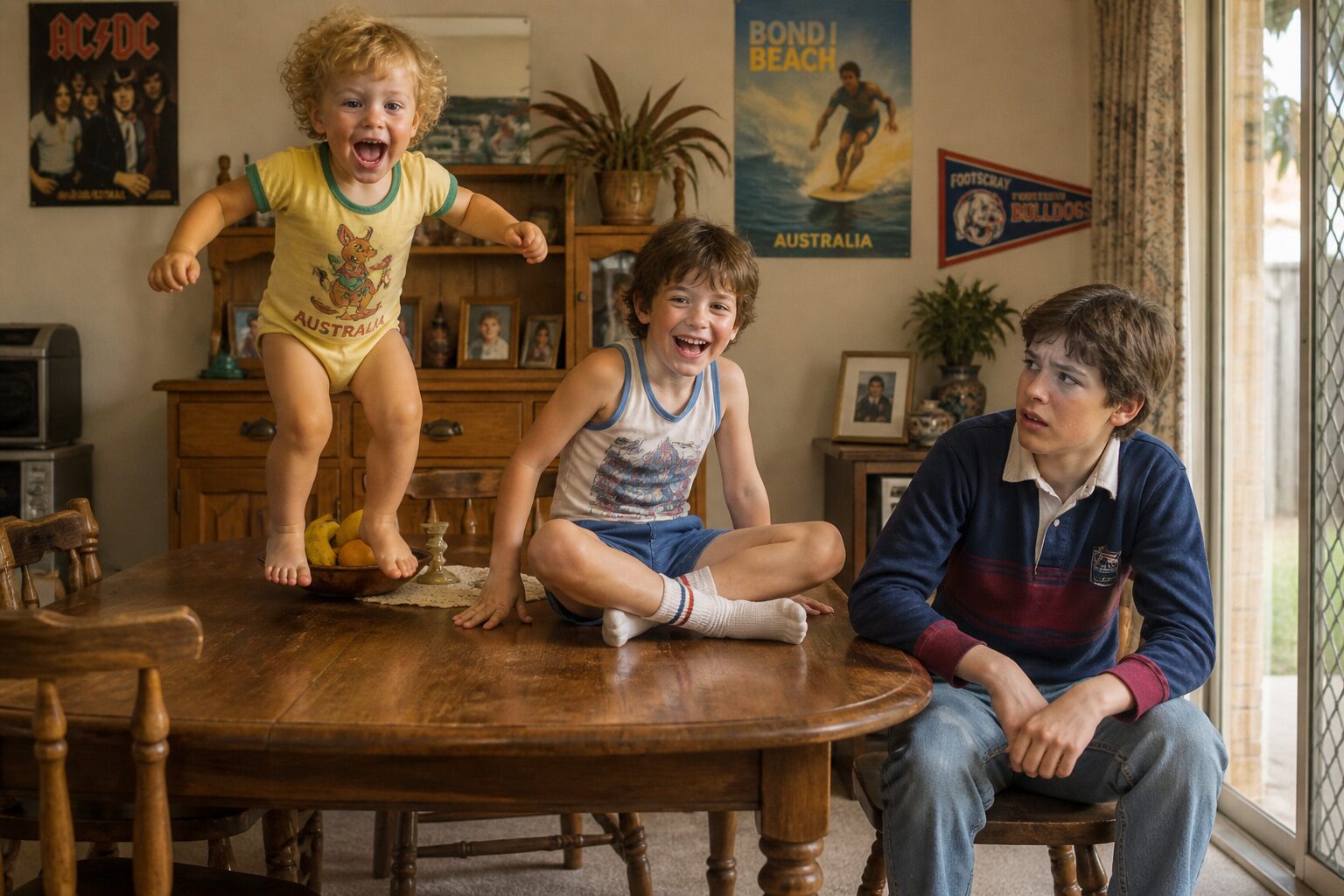
Childhood furniture: does furniture feature in children’s memories, the feel, the smell, the comfort, or is it just something for them to jump on?
Furniture sits quietly in the background of childhood, rarely noticed in the moment yet often deeply embedded in memory. Ask an adult to recall their early years and they might not immediately mention a chair or a table—but press a little further and the details begin to surface: the scratchy fabric of a couch, the cool varnish of a wooden desk, the faint smell of polish or dust warmed by afternoon sun. Furniture, it turns out, is not just functional. It becomes part of the sensory architecture of growing up.
At first glance, children don’t seem to care about furniture in the way adults do. They don’t admire craftsmanship, compare finishes, or worry about durability. A sofa is not a design statement; it is a launching pad. A bed is not an investment; it is a trampoline, a fortress, a pirate ship. From an adult perspective, this can make furniture seem invisible to children—just background equipment in the theatre of play. But that interpretation misses something important. Children engage with furniture intensely, just not in the way adults expect.
For a child, furniture is experienced physically before it is understood conceptually. The feel of materials is one of the earliest impressions. A polished timber table might be remembered not as “mahogany” but as “the slippery one where my arms stuck in summer.” A fabric armchair becomes “the itchy seat” or “the soft one you sink into.” These tactile impressions are powerful because they are repeated daily, often without conscious attention.
Over time, they form a kind of emotional shorthand: comfort, safety, boredom, restriction.
Smell is another under appreciated dimension. Childhood homes have distinct scents, and furniture plays a surprisingly large role in that.
Upholstery absorbs the aroma of meals, cleaning products, pets, and even seasons. A leather lounge might carry a faint sweetness mixed with polish.
Wooden chests of drawers might smell of cedar, or of the forgotten contents stored inside them for years. These smells are subtle but persistent, and because the olfactory system is closely linked to memory, they can trigger vivid recollections decades later. A single whiff of furniture polish or old wood can transport someone back to a grandparent’s living room or their own childhood bedroom with startling clarity.
Comfort, of course, is central. But comfort for a child is not always the same as comfort for an adult. Adults seek ergonomic support; children seek emotional reassurance. A sagging couch that an adult might consider worn out can be a child’s favourite place because it “hugs” them. A narrow bed might feel perfectly adequate if it has always been theirs, especially if it is associated with stories, bedtime rituals, or the quiet safety of night. In this sense, furniture becomes a container for routines. The chair where a parent reads stories, the table where homework is done, the bed where fears are soothed—these objects accumulate meaning through repeated experiences.
At the same time, children are famously hard on furniture. They climb, jump, drag, spill, and repurpose without hesitation. From their perspective, furniture is not fixed in its function. A dining table can become a cave when covered with a blanket. A row of chairs can transform into a train. A wardrobe can be a hiding place. This imaginative reworking is not a sign that furniture is unimportant; it is evidence that it is deeply integrated into play. Furniture provides the structure—the physical boundaries—within which imagination operates.
There is also an element of scale that shapes how children experience furniture. Most furniture is designed for adults, which means it is slightly too large, too high, or too heavy for a child. This creates a subtle but constant sense of effort. Climbing onto a chair requires a small exertion.
Reaching a tabletop involves stretching or standing on tiptoe. These micro-challenges are part of daily life, and they influence how children perceive their environment. A child-sized chair, when encountered, often feels special not because of its design but because it fits. It offers a rare sense of autonomy: “this is made for me.”
Over time, certain pieces of furniture become anchors of memory. These are not necessarily the most expensive or visually striking items. Often, they are the ones that are used the most or that are associated with strong emotions.
A battered coffee table covered in marks might be remembered fondly because it was the centre of family gatherings. A simple desk might stand out because it was the site of early creativity—drawing, writing, building. Even negative experiences can attach to furniture: the chair where a child sat during a difficult conversation, or the bed where they lay awake feeling unwell. These associations can persist long after the furniture itself is gone.
Interestingly, furniture can also serve as a marker of time. Changes in furniture often coincide with transitions in childhood. Moving from a cot to a bed is a significant milestone. Getting a “big kid” desk can signal the start of school life. Replacing a worn-out couch might coincide with a house move or a shift in family circumstances. These changes are not always consciously noted, but they contribute to a sense of progression. Furniture, in this way, becomes part of the narrative structure of growing up.
There is a social dimension as well. Furniture shapes how children interact with others. The layout of a living room influences how families gather. A large dining table encourages shared meals and conversations, while separate seating areas might lead to more fragmented interactions. For children, these patterns become normal. The feel of sitting together on a couch, or the ritual of taking a specific seat at the table, can become deeply ingrained. Later in life, people often recreate these arrangements without realising why they feel “right.”
The durability of furniture also plays a role in memory. Items that last for many years accumulate layers of experience. A chair that has been in the family since early childhood becomes almost like a silent witness to events. Scratches, stains, and repairs become part of its story. Children may not think about this explicitly, but they notice continuity. When a piece of furniture disappears, it can feel like a small loss, even if it is replaced by something objectively better.
On the other hand, some furniture is forgettable. Generic, interchangeable pieces that are rarely used or that lack distinctive sensory qualities may leave little trace in memory. This suggests that it is not furniture per se that is remembered, but the interaction between the child and the object.
Frequency of use, sensory distinctiveness, and emotional context all contribute to whether a piece of furniture becomes memorable.
There is also an aesthetic dimension, though it operates differently for children. While they may not articulate preferences in terms of style, children do respond to colour, shape, and novelty. Brightly coloured furniture or pieces with unusual forms can capture attention and become focal points. However, these features alone do not guarantee lasting memory. Without meaningful interaction, even the most visually striking item can fade into the background.
In recent years, there has been a growing interest in designing furniture specifically for children, with an emphasis on ergonomics, safety, and creativity. While these designs can enhance comfort and usability, it is worth considering whether they also influence memory. A well-designed child’s chair that supports posture and fits perfectly might be appreciated in the moment, but will it be remembered decades later? Possibly—but only if it is part of meaningful experiences. Design can facilitate interaction, but it cannot replace it.
The question of whether furniture features in children’s memories, then, does not have a simple yes or no answer. Furniture is rarely the star of the story, but it is almost always part of the scene. It contributes to the texture of memory—the background against which events unfold. Its role is subtle but pervasive, shaping how spaces are experienced and how moments are felt. Growing up in Sydney’s Belfield and visiting friends and family in Lakemba, Strathfield South, Burwood, Croydon and Greenacres, furniture edges all of my childhood memories.
Perhaps the most accurate way to think about furniture in childhood is as a kind of sensory scaffold. It provides the physical and emotional framework within which life happens. Children may not consciously notice it, but they are constantly interacting with it—touching, smelling, climbing, leaning, resting. These interactions accumulate over time, forming a reservoir of impressions that can be drawn upon later in life.
When adults look back, they often rediscover these impressions in unexpected ways. The feel of a particular fabric, the smell of old wood, the shape of a familiar chair—these details can trigger a cascade of memories. Suddenly, the furniture is no longer invisible. It becomes a key to the past, unlocking moments that might otherwise remain hidden.
And yet, there is something fitting about the way furniture recedes into the background during childhood. It allows children to focus on what matters most to them: play, exploration, relationships. Furniture supports these activities without demanding attention. It is both present and unobtrusive, shaping experience without overshadowing it.
So is furniture just something for children to jump on? In one sense, yes—that is part of its role. It invites physical engagement and imaginative play.
But to reduce it to that would be to overlook its deeper significance.
Furniture is woven into the fabric of childhood in ways that are easy to miss but hard to erase. It holds the imprints of daily life, quietly absorbing the moments that, taken together, define what it means to grow up.
In the end, furniture may not be what children remember first, but it is often what helps them remember at all.